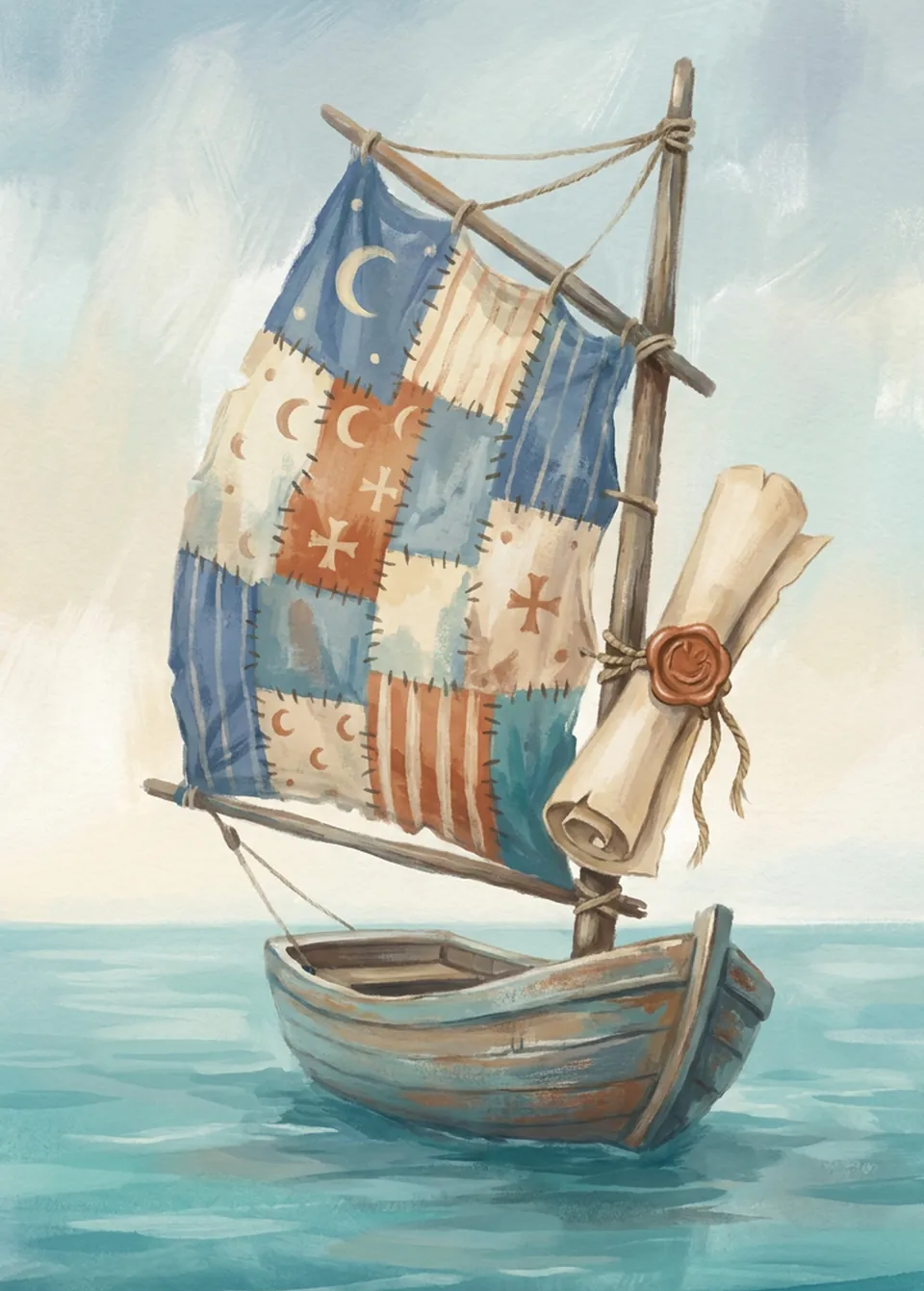
Another Flag
Before the treaty, a ship had to wear someone else's colours.
Why this image
A small boat sails a calm turquoise sea under a sail stitched from patches of different flags, crescents, crosses and stripes, with a sealed scroll tied to its mast. Until 1612 Dutch ships in Ottoman waters sailed under a French or an English flag, because the Republic had no treaty with the sultan; Cornelis Haga, who had read law at Leiden, obtained one, signed by Sultan Ahmed I on 6 July 1612, and only then did Dutch merchants sail under their own flag 1. Not painted, but the same: trade with the Orient by sea stands in stone at In den Vergulden Turk 2, and at the former Turkish honorary consulate a local resident acted for another country 3.
What it draws on · 3
1612
Until 1612 Dutch ships in Ottoman waters sailed under a French or an English flag, because the Republic had no treaty with the sultan. Cornelis Haga, who had read law at Leiden, obtained one at last: Sultan Ahmed I signed the capitulation on 6 July 1612, making the Republic the third nation to hold such a treaty after France and England. Haga stayed on until 1639 as the Republic's first ambassador in Constantinople. Only from then did Dutch merchants sail the Levant under their own flag.
Sources · 3
- Nationaal Archief 1.03.01 — Directie van de Levantse Handel en de Navigatie op de Middellandse Zee
- Gemeentearchief Schiedam — Cornelis Haga (1578-1654), pionier en diplomaat in Constantinopel
- Ingrid van der Vlis & Hans van der Sloot, 'Cornelis Haga (1578-1654)'
de drie figuren
In the pediment stand three figures by the Flemish sculptor Pieter Xavery (1647 — after 1674), from left to right: Neptune, god of the sea; an Easterner in a turban, described as an Ottoman merchant and sometimes identified as Barbaros Hayreddin Pasha; and Mercury, god of commerce. Together they say one sentence: trade with the Orient, by sea. The man in the middle is the trading partner, standing between the sea and the profit.
Sources · 3
- Leiden In Motion: De Diversity Walk — Stichting Güney / Turksarchief.nl
- Rijksmonumenten.nl — beschrijving van het fronton (Pieter Xavery, ca. 1673)
- Pieter Xavery — Vlaams barokbeeldhouwer, werkzaam in de Republiek
wat een honorair consul is
An honorary consul is not a posted diplomat but a local resident who represents a country alongside their own work, usually unpaid. That is why this consulate hung on a single person, and why it ended not with a decision but with a death.
Sources · 2
- Unity — 'Honorair Consulaat Generaal Turkije in Leiden gaat dicht': sluiting omdat geen opvolger werd gevonden
- Leiden In Motion: De Diversity Walk — Stichting Güney / Turksarchief.nl
Shares its places with · 8
 The Name RemainsIn den Vergulden Turk (At the Gilded Turk)
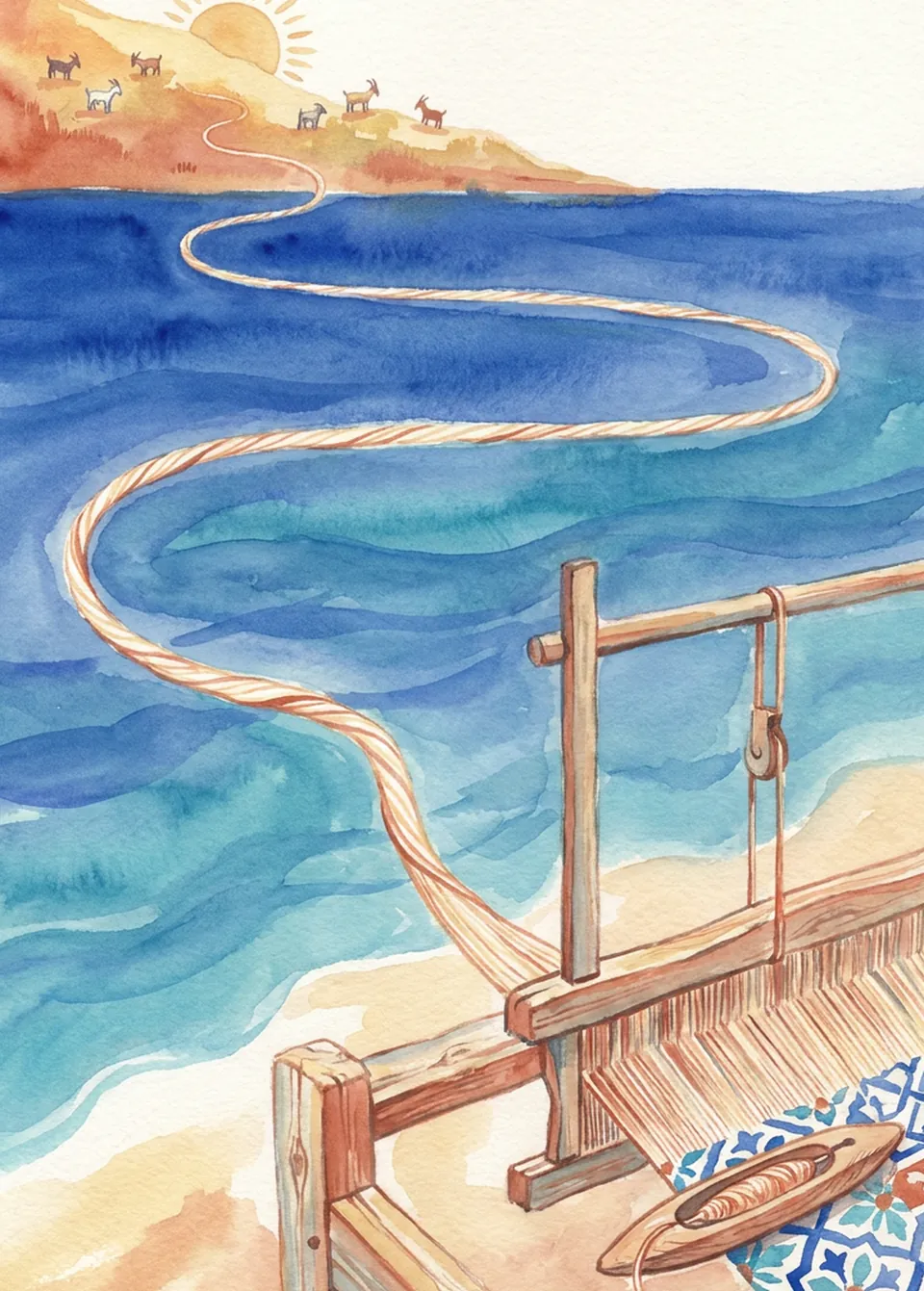 A Thread from FarIn den Vergulden Turk (At the Gilded Turk)
 The MoonIn den Vergulden Turk (At the Gilded Turk)
 Held by OneFormer Turkish Honorary Consulate
 In the SteamFormer Turkish Honorary Consulate
 Behind the FacadeFormer Turkish Honorary Consulate
 A Seed in a LetterHeritage Leiden and Surroundings (Atlas Blaeu)
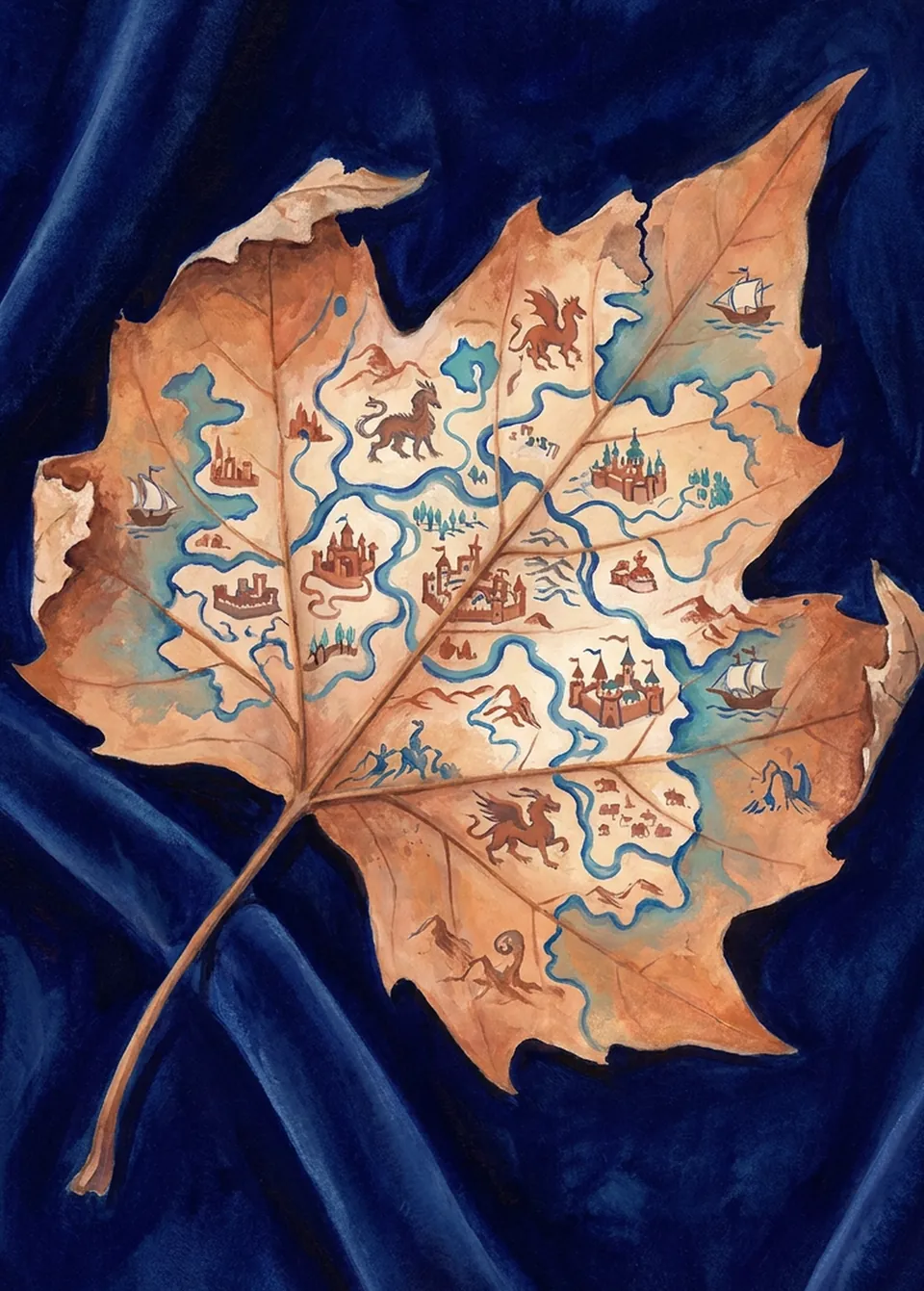 A Fragile EmpireHeritage Leiden and Surroundings (Atlas Blaeu)
Painted with an image model from the facts on this page, and chosen by hand. City in Motion.