Bread for a Token
Care, measured out one loaf at a time.
Why this image
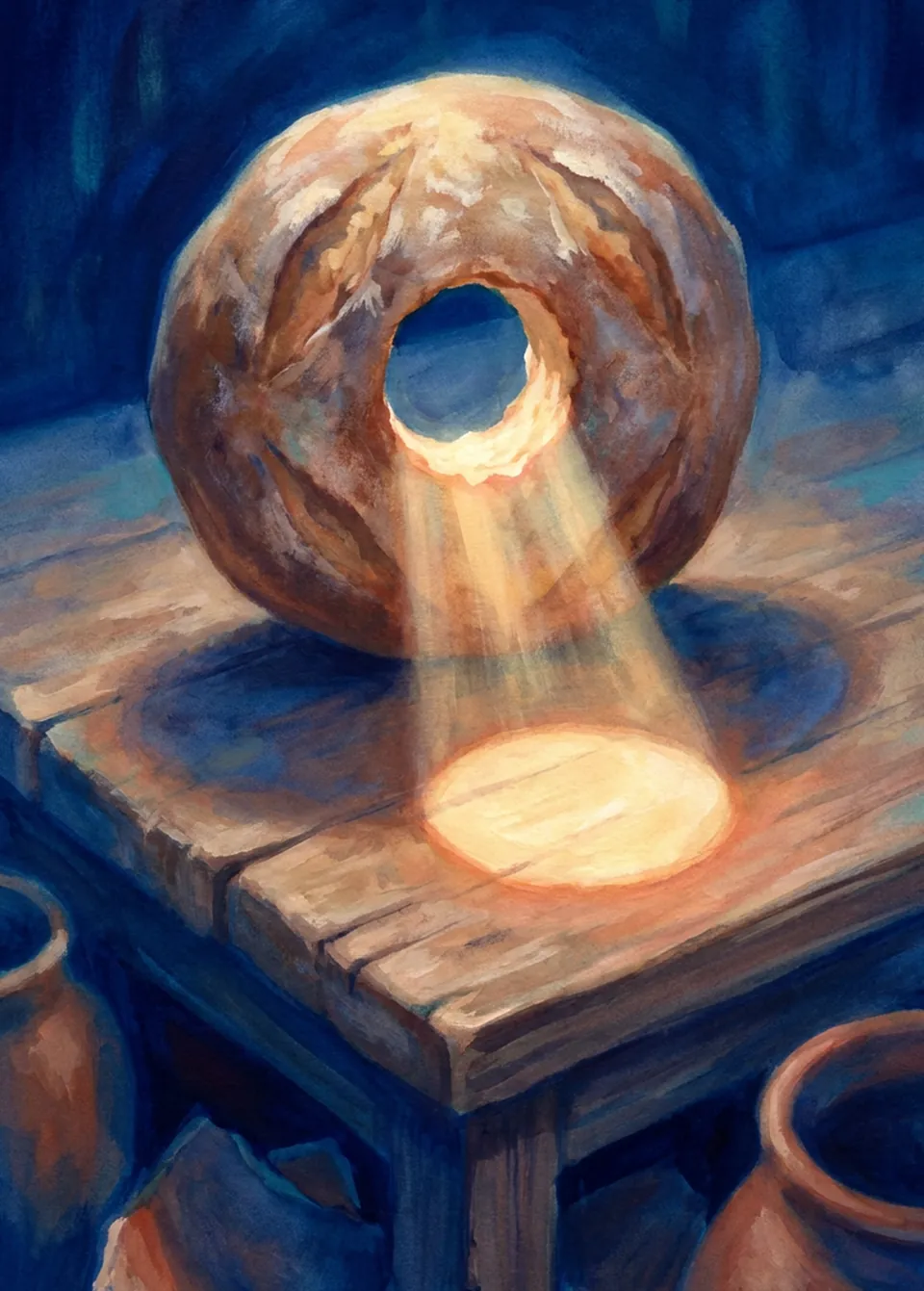
A round loaf with a hole through its middle stands on a bare wooden table in the dark, and a warm light falls through the hole as a bright round spot on the wood. In the seventeenth century the deacons of the huiszittenhuis on the Oude Rijn built their own bakery for the poor, where bread was baked against bread tokens handed out at church services 1. Not painted, but the same care measured out: the oldest hofjes had at least twelve small houses for the poor and elderly, after the twelve apostles 2, and the orphanage took in children without parents for 378 years, some 579 of them in 1788 3.
What it draws on · 3
oorsprong
The huiszittenhuis on the Oude Rijn — the house from which the city relieved the poor who stayed in their own homes — is first named in a charter of Duke Philip of Burgundy dated 5 January 1427. In the seventeenth century the deacons built their own Armenbakkerij here, a bakery for the poor, where bread was baked against bread tokens handed out at church services. That is what the building is named after.
Sources · 1
- Diaconaal Centrum De Bakkerij — debakkerijleiden.nl/historie
wat een hofje is
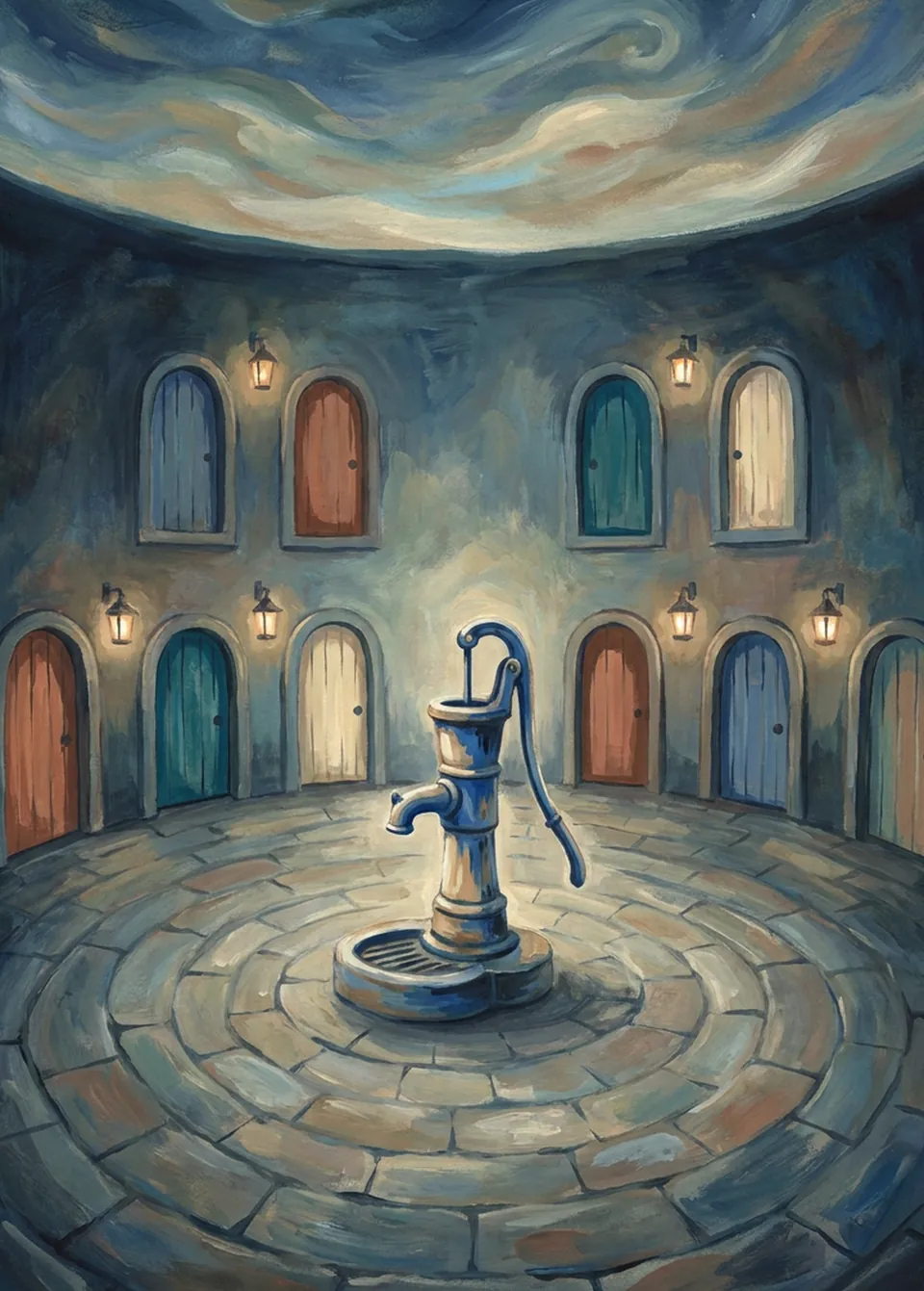
A hofje is a cluster of small houses set close around a shared courtyard, founded by will by a single person and meant for the poor and elderly. In the oldest hofjes there were at least twelve of them, after the twelve apostles. A chapel usually belonged to it — almost all of those have gone — and in the courtyard stood a pump and one or two privies.
Sources · 3
- Nederlandstalige Wikipedia — Hofjes in Leiden
- De Leidse Canon — 'De Leidse hofjes'
- Holland Historisch Tijdschrift — 'De Leidse hofjes'
het weeshuis
The Heilige Geest- of Arme Wees- en Kinderhuis — the Holy Spirit or Poor Orphans' and Children's House — began in 1583, when the Onze Lieve Vrouwegasthuis was handed over to the Masters of the Holy Spirit, the church board for poor relief; a north wing was added in 1604. The house took in children without parents or guardian and did so for 378 years, from 1583 to 1961. In 1788 an estimated 579 children lived there, 62 per cent girls and 38 per cent boys; after 1850 the number fell away gradually.
Sources · 2
- Nederlandstalige Wikipedia — Heilige Geest- of Arme Wees- en Kinderhuis, Leiden
- Utopa-Weeshuis Kinderrechtenhuis Leiden — utopa-weeshuis.nl
Shares its places with · 6
 Under One RoofDiaconal Center De Bakkerij · Leiden Courtyards (Hofjes) · Children's Rights House
 Higher GroundDiaconal Center De Bakkerij · Children's Rights House
 From Care to RightsDiaconal Center De Bakkerij · Children's Rights House
 The Next HouseLeiden Courtyards (Hofjes) · Children's Rights House
 Two NightsDiaconal Center De Bakkerij
 The BequestLeiden Courtyards (Hofjes)
Painted with an image model from the facts on this page, and chosen by hand. City in Motion.