A Flower Named After a Hat
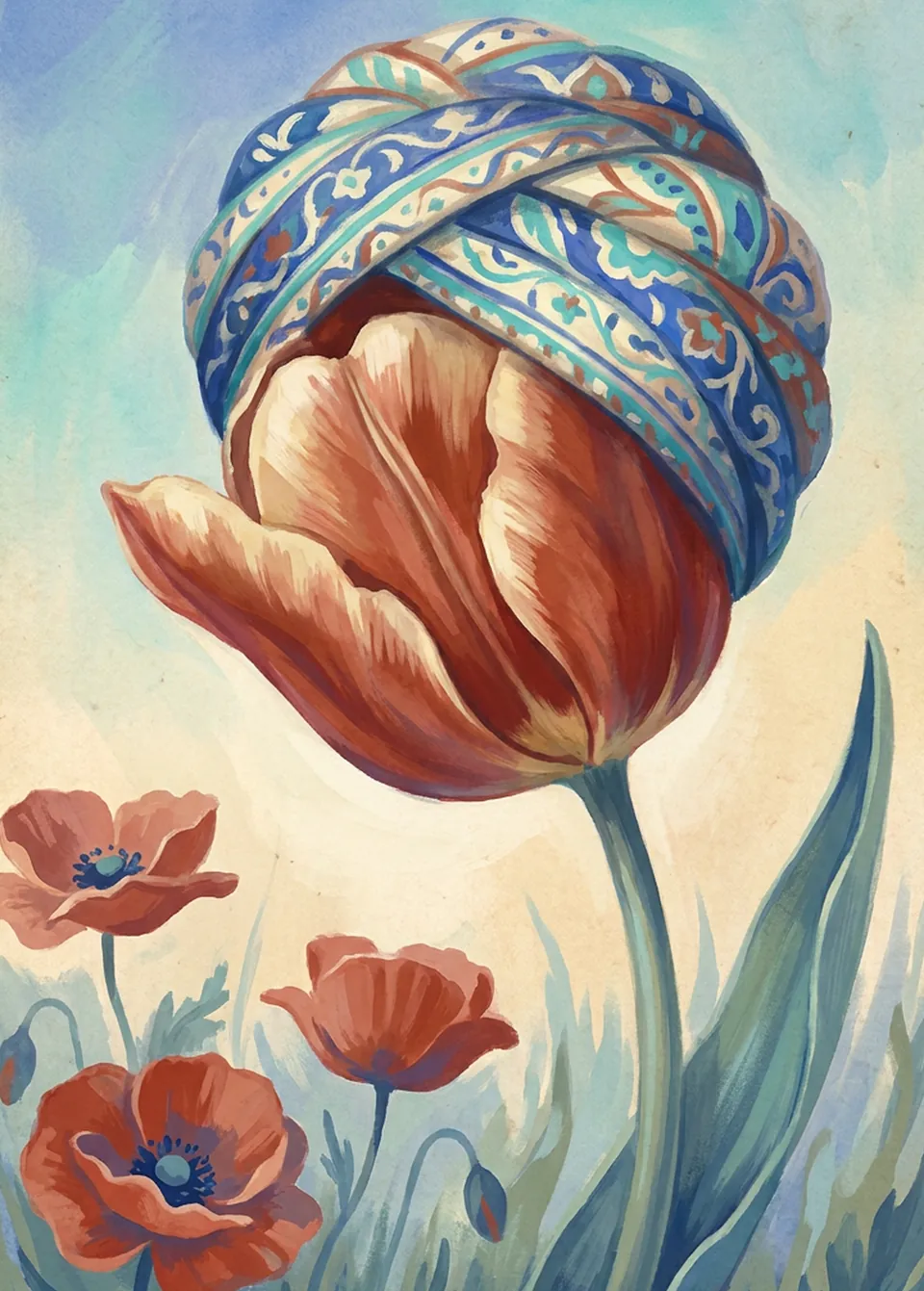
A flower that carries the name of a turban.
Why this image
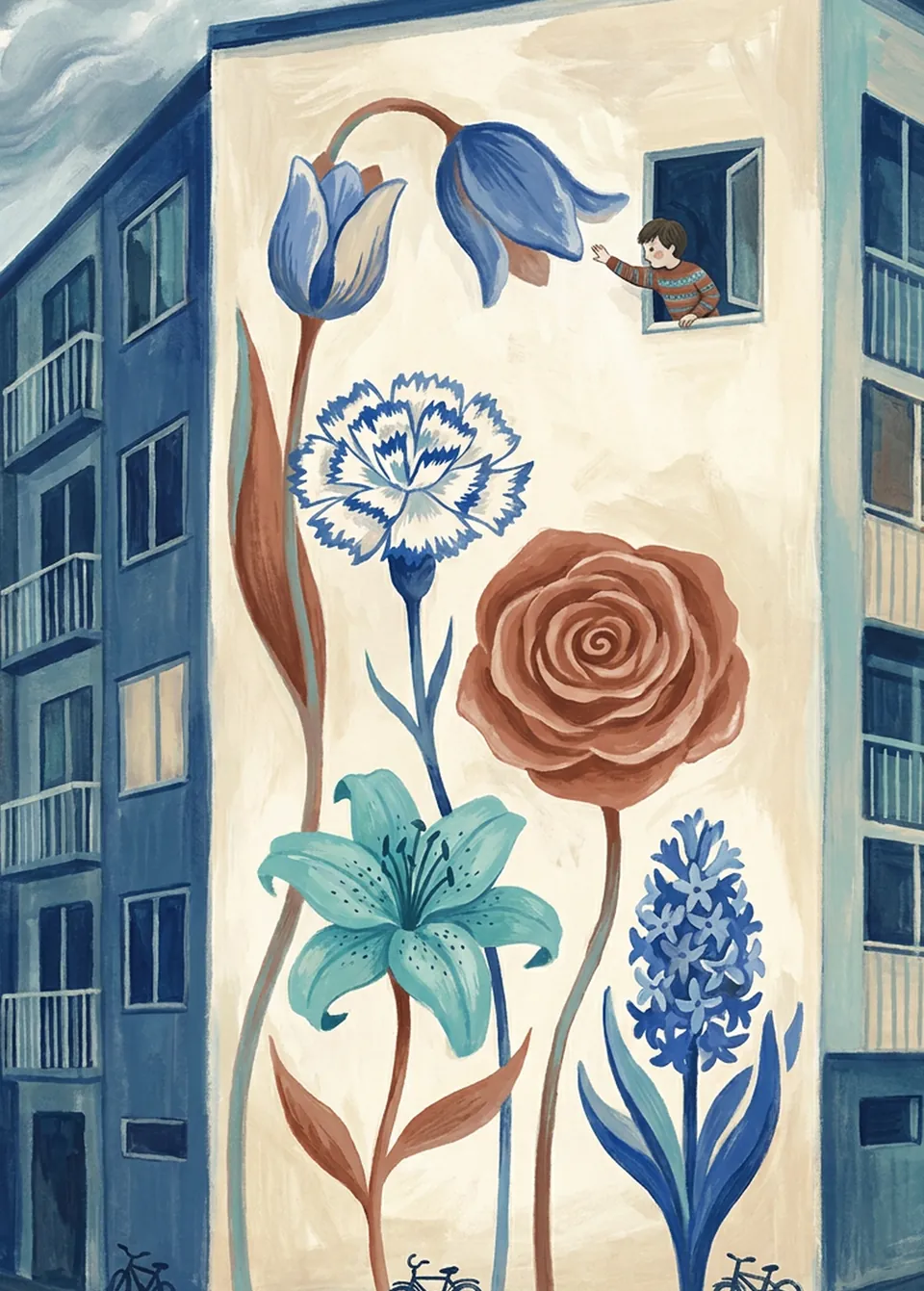
A tulip opens with its upper petals wrapped in a patterned turban of cobalt and turquoise, and red poppies stand beside it. The flower's name comes from Turkish: 'tulip' goes back to tülbent, from the Persian dulband, 'turban', because the opening flower put people in mind of one; in Turkish itself it is lale 1. The tulip reached the Netherlands from the Ottoman Empire in 1593 through Clusius, and the first bulbs flowered in the Hortus 2. The poppies are those of Fakir Baykurt's Turkish poem 'Gelincikler', 'Poppies', which went up on a wall at Havikshorst 1 in 2000 and is no longer there 3.
What it draws on · 3
tulband
The flower's name comes from Turkish: 'tulip' goes back to Ottoman Turkish tülbent, itself from Persian dulband, meaning 'turban'. The opening flower put people in mind of a turban. In Turkish the flower is not called that at all — there it is lale.
Sources · 3
- Leiden In Motion: De Diversity Walk — Stichting Güney / Turksarchief.nl
- Etymonline / Wordhistories — 'turban' and 'tulip' as etymological twins
- Wiktionary — tulip: Ottoman Turkish tülbent < Persian dulband
de tulp uit het Ottomaanse Rijk
The tulip reached the Netherlands from the Ottoman Empire in 1593 through Carolus Clusius; the first bulbs flowered in the Hortus botanicus of Leiden.
Sources · 1
- Hortus botanicus Leiden
Gelincikler
One of those poems was Turkish. In 2000 Fakir Baykurt's 'Gelincikler' ('Poppies') went up on the wall at Havikshorst 1, a year after the poet's death. Baykurt (Yeşilova 1929 — Essen 1999) was a writer and trade unionist who wrote novels, stories and children's books. Jan Willem Bruins painted the poppies as three blazing red spheres, large enough to be seen from far off. The poem is no longer there.
Sources · 3
- Muurgedichten Leiden — 'Gelincikler' (muurgedichten.nl)
- Straatpoezie.nl — 'Gelincikler – Klaprozen', Fakir Baykurt, Havikshorst 1 Leiden
- Nederlandstalige Wikipedia — Lijst van muurgedichten in Leiden, nr. 74
Shares its places with · 7
 The Tree Comes HomeHortus Botanicus Leiden
 A Seed in a LetterHortus Botanicus Leiden
 Under GlassHortus Botanicus Leiden
 Flowers on the FlatsPublic Art and Street Art
 A Language as a VoicePublic Art and Street Art
 A Wall in Your ScriptPublic Art and Street Art
 Behind the FacadePublic Art and Street Art
Painted with an image model from the facts on this page, and chosen by hand. City in Motion.