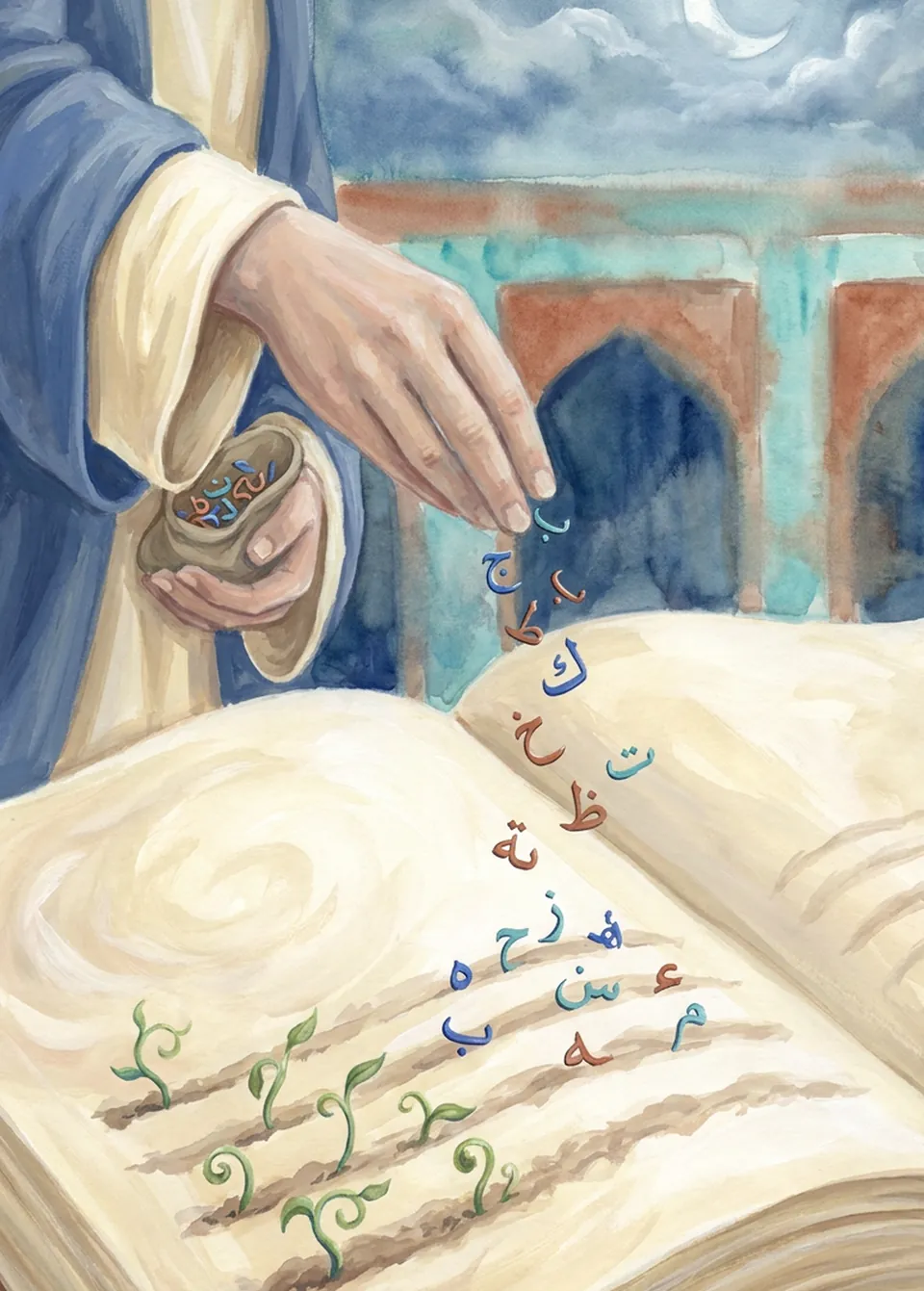
Own the Letters
To print a script you must first own its letters.
Why this image
A hand sows letters of Arabic script, cobalt and terracotta, from a small pouch into the furrows of an open book, and in the first rows green shoots are already coming up; behind it, arches stand under a crescent moon. Raphelengius was the first printer in Europe to set Arabic outside Rome, and cut the first Arabic types used in Leiden 2. Erpenius kept his own Oriental press; after his death his Arabic types stayed in use in Leiden, for to print the script you must first own the letters 1. Brill went on to build an enormous collection of types, from Arabic and Hebrew to Chinese characters 3.
What it draws on · 3
zijn eigen pers
Erpenius also kept his own Oriental printing house, set up to typeset books in Arabic script. After his death the press was bought by Isaac Elzevier, and his Arabic types stayed in use in Leiden. To print the script, you must first own the letters.
Sources · 2
- Thomas van Erpe — Engelstalige Wikipedia: eigen oosterse pers; verkoop aan Isaac Elzevier
- Encyclopaedia Iranica — Leiden University Library: oosterse drukkerij
de eerste Arabische letters buiten Rome
In 1584 Cardinal Ferdinando de' Medici founded the Typographia Medicea in Rome, at Pope Gregory XIII's command: a press for Oriental languages, for scholarship but also for the mission. Raphelengius was the first printer in Europe to set Arabic outside Rome: he cut the first Arabic types used in Leiden and issued a specimen of them in 1595. What served conversion in Rome served study here.
Sources · 3
- Leiden In Motion: De Diversity Walk — Stichting Güney / Turksarchief.nl
- John A. Lane, 'The Arabic type specimen of Franciscus Raphelengius's Plantinian printing office (1595)', Universiteitsbibliotheek Leiden 1997
- Medici Oriental Press / Typographia Medicea — gesticht 1584 door Ferdinando de' Medici op last van paus Gregorius XIII
oosterse letters
Brill's publications were aimed at Oriental languages, cultures, religions and history, and something practical followed from that: the printing house built up an enormous collection of types, from Arabic and Hebrew to Chinese characters. What was a problem elsewhere could simply be set here.
Sources · 2
- Allard Pierson (UvA) — Archief van Uitgeverij Brill: uitgebreide collectie oosterse lettertypen
- Nederlandstalige Wikipedia — Koninklijke Brill NV
Shares its places with · 4
 One Long LineRaphelengius and Arabic Printing · Brill Publishing House and Printing Press
 Forever RenewedThomas van Erpe (Erpenius)
 Held by OneThomas van Erpe (Erpenius)
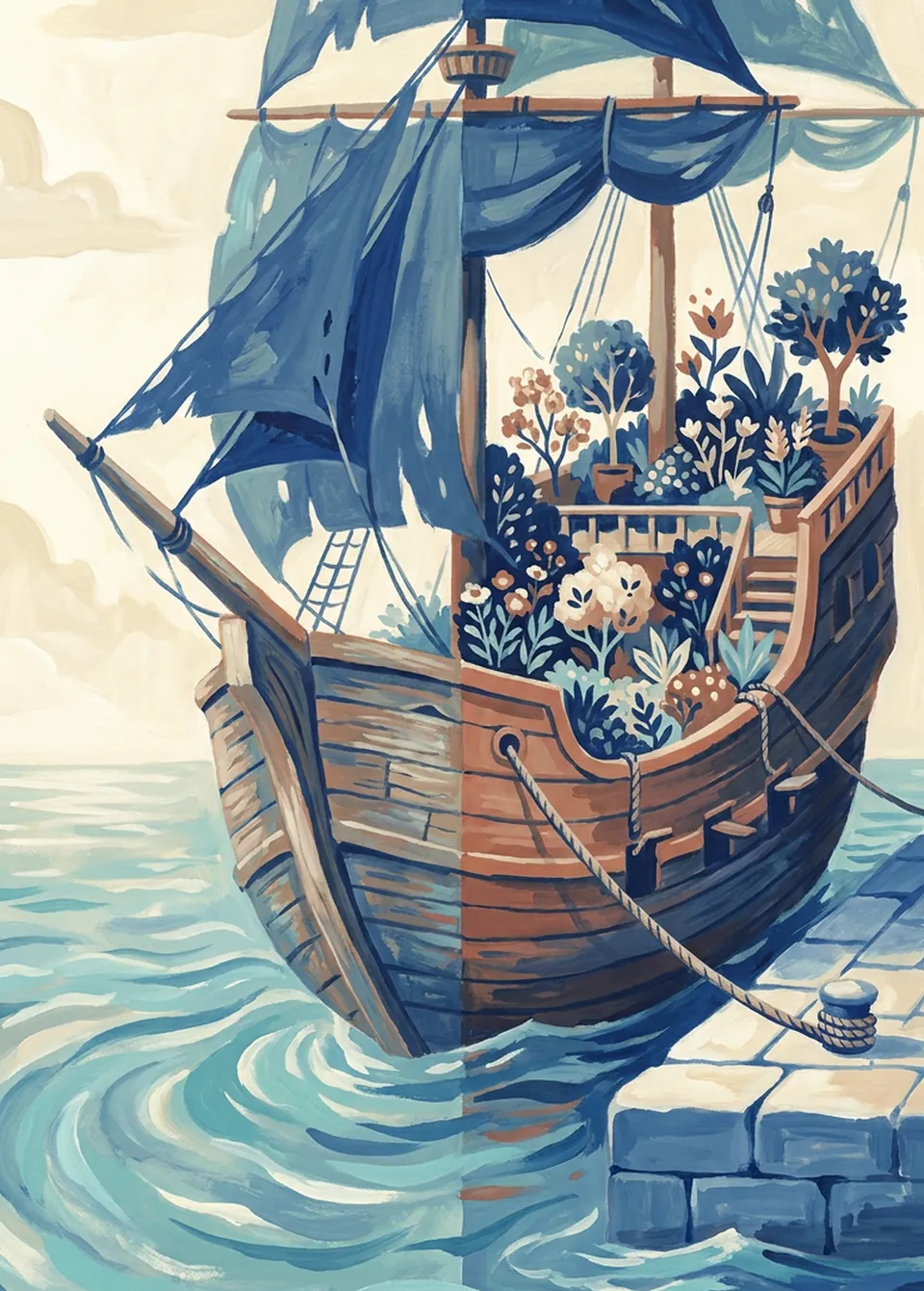 Half SailedThomas van Erpe (Erpenius)
Painted with an image model from the facts on this page, and chosen by hand. City in Motion.