The Same Route
Knowledge arrived by the same route as the sugar.
Why this image
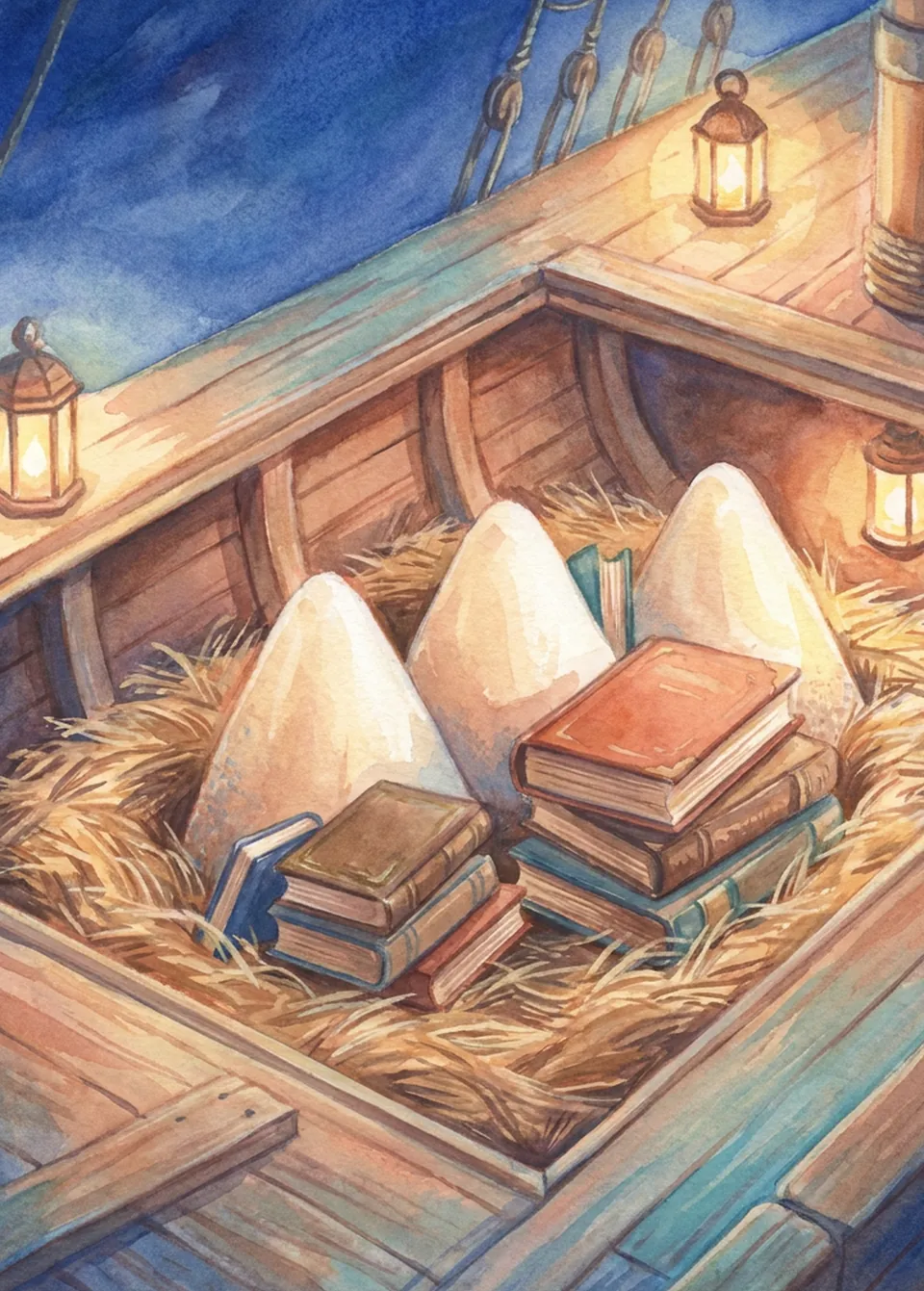
In the open hold of a wooden ship, lit by lanterns at night, white sugar loaves and stacks of books lie side by side in the same straw. Leiden became a centre for the study of the languages, plants and peoples of places far outside Europe, and trained administrators for the colonies: what the city gained in knowledge of other cultures came by the same route as the sugar 1. That route brought manuscripts too, such as those Golius and Warner brought back from Aleppo and Constantinople 2, and books went the other way: VOC staff sold more than ten thousand Western books to Japanese buyers 3. In Leiden the books came first, and the subject followed them 4.
What it draws on · 4
de kennis
Knowledge flowed along the same lines. Leiden became a centre for the study of the languages, plants and peoples of places far outside Europe, and the university also trained administrators for the colonies: officials for the Dutch East Indies between 1877 and 1891, and from 1902 in a programme of its own. What the city gained in knowledge of other cultures came by the same route as the sugar.
Sources · 3
- Leiden In Motion: De Diversity Walk — Stichting Güney / Turksarchief.nl
- Universiteit Leiden — 'Kennis, kleding en koffie: zo maakte Leiden deel uit van het koloniale en slavernijverleden' (2024)
- Vooronderzoek naar de koloniale en slavernijgeschiedenis van de stad Leiden en de Universiteit Leiden (2025)
wat er nu ligt
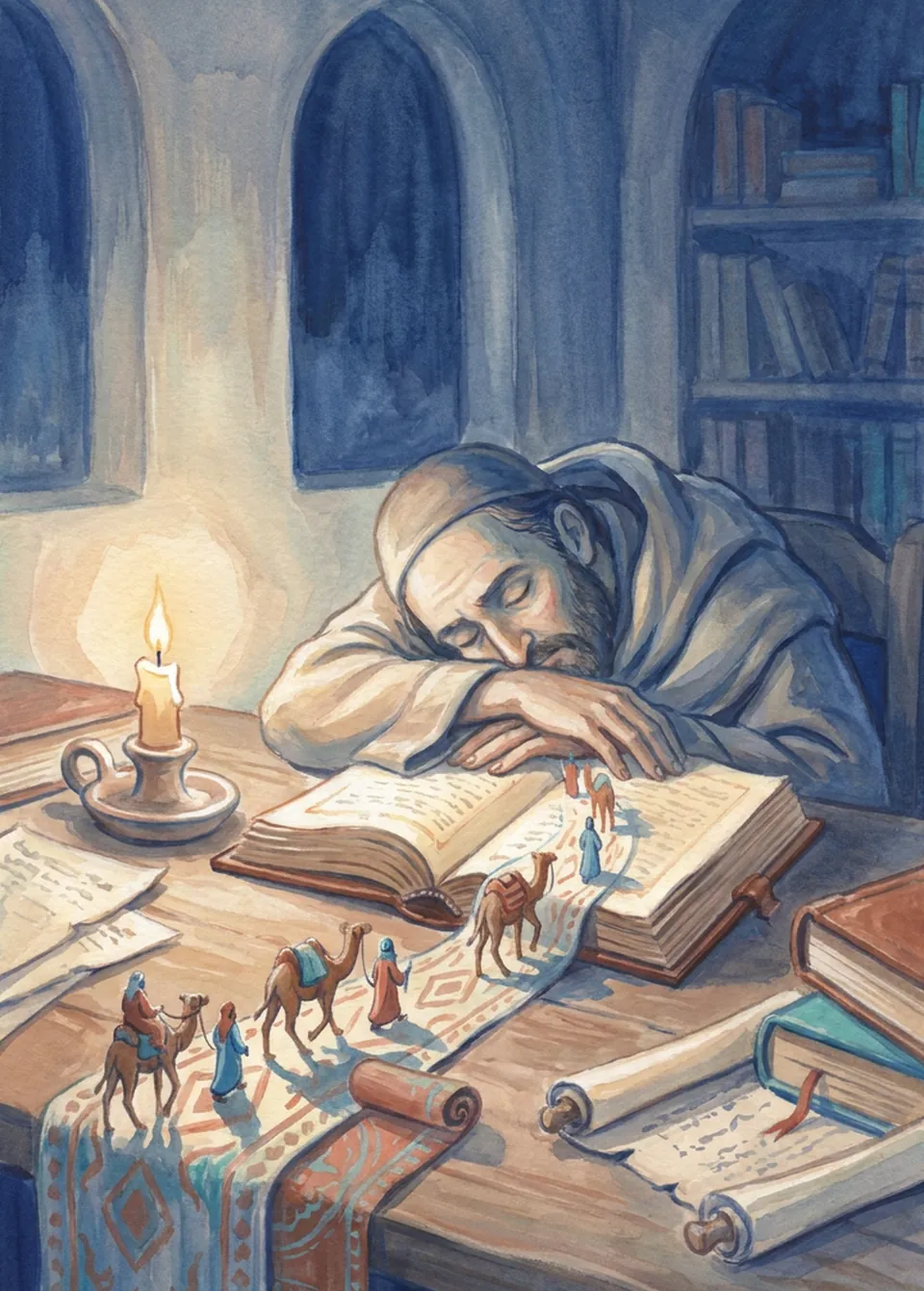
The Middle Eastern special collections now hold some 6,500 manuscripts and many times that number of early printed books. Among them are about 4,000 Arabic manuscripts from the ninth to the twentieth century and about 1,200 Persian ones, alongside some 3,000 early Persian printed books — and Turkish manuscripts too, such as those Golius and Warner brought back from Aleppo and Constantinople. Their origins run from North Africa to Central Asia and southeastern Europe.
Sources · 2
- Universiteit Leiden — Midden-Oosterse bijzondere collecties: ca. 6.500 handschriften
- Leiden University Libraries — Collection Guides: Manuscripts, Arabic (ca. 4.000, 9e-20e eeuw); Manuscripts, Persian (ca. 1.200 handschriften, ca. 3.000 oude drukken)
rangaku
The trade also brought knowledge. Between the end of the eighteenth century and the beginning of the nineteenth, VOC staff sold more than ten thousand Western books to Japanese buyers, and out of them grew rangaku, 'Dutch learning': language, medicine and natural science, read in Dutch. Over that period the Dutch changed, in Japanese eyes, from commercial agents into importers of European knowledge.
Sources · 2
- National Diet Library Japan — 'Japan-Netherlands Exchange in the Edo Period'
- Wacana — 'Dejima; VOC dan rangaku' (Bambang Wibawarta)
waar de collecties aankwamen
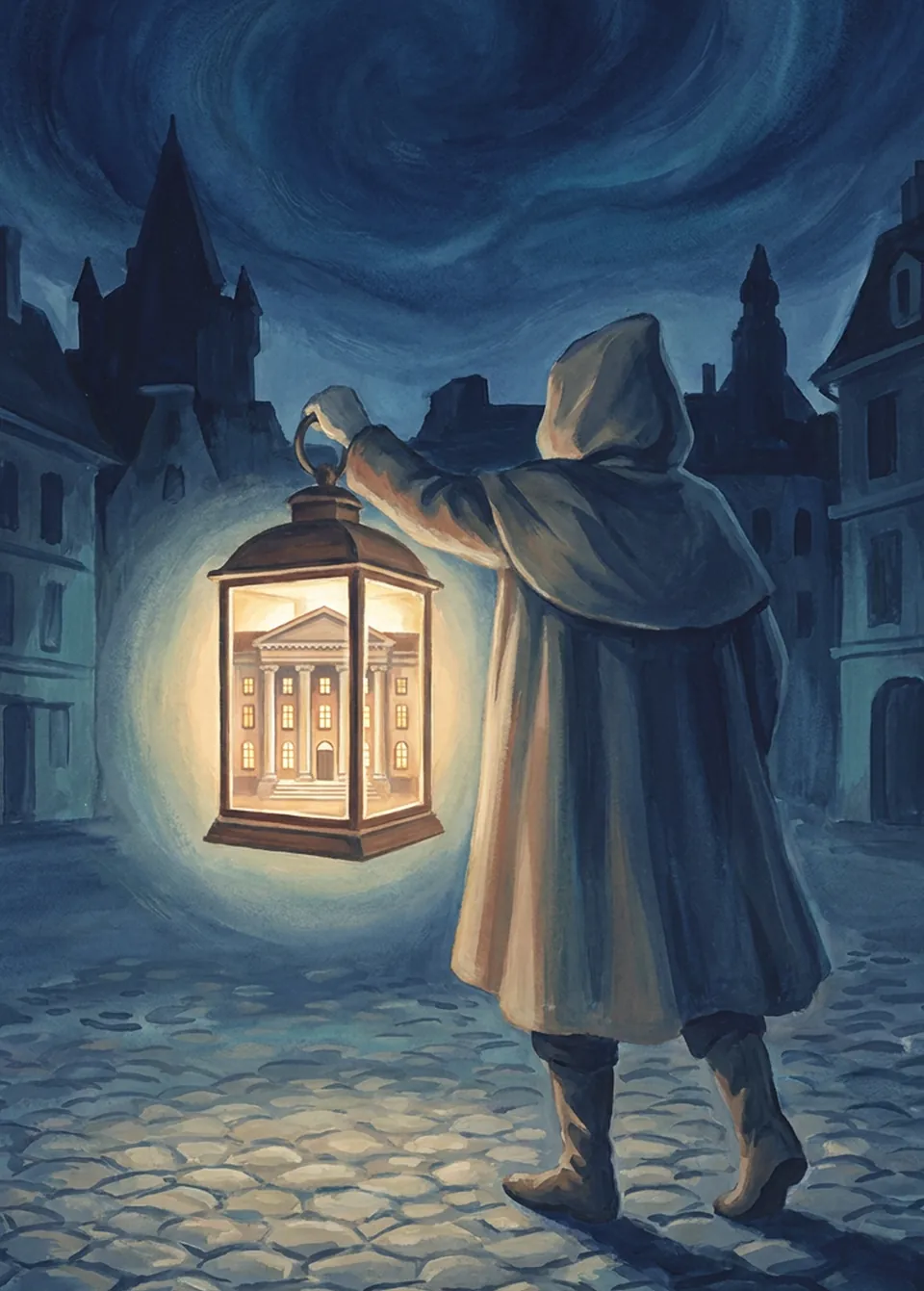
So this is the building into which Leiden's Oriental collections arrived: Scaliger's bequest in 1609, the manuscripts Golius brought from Aleppo and Constantinople, and what came after. In the same house the Islamic world is taught today. The books came first; the subject followed them.
Sources · 3
- Universiteit Leiden — Oude UB: universiteitsbibliotheek 1595-1983 aan het Rapenburg
- 'Tous mes livres de langues estrangeres': het oosterse legaat van Josephus Justus Scaliger (1609)
- Leiden University Libraries — Jacobus Golius collection
Shares its places with · 15
 Only the YieldJapan Museum SieboldHuis · Mansions along the canals (Slavery/Colonialism)
 Forever RenewedLeiden University - Islamic Studies
 Come and LookLeiden University - Islamic Studies
 A Wall in Your ScriptLeiden University - Islamic Studies
 East Through BooksLeiden University - Islamic Studies
 The Next HouseLeiden University - Islamic Studies
 Carried HomeJapan Museum SieboldHuis
 The Only WindowJapan Museum SieboldHuis
 Under GlassLeiden University Library - Ottoman Collection
 A Fragile EmpireLeiden University Library - Ottoman Collection
 The BequestLeiden University Library - Ottoman Collection
 Held by OneLeiden University Library - Ottoman Collection
 Named After a CoastMansions along the canals (Slavery/Colonialism)
 In the SteamMansions along the canals (Slavery/Colonialism)
 Cloth That BoughtMansions along the canals (Slavery/Colonialism)
Painted with an image model from the facts on this page, and chosen by hand. City in Motion.