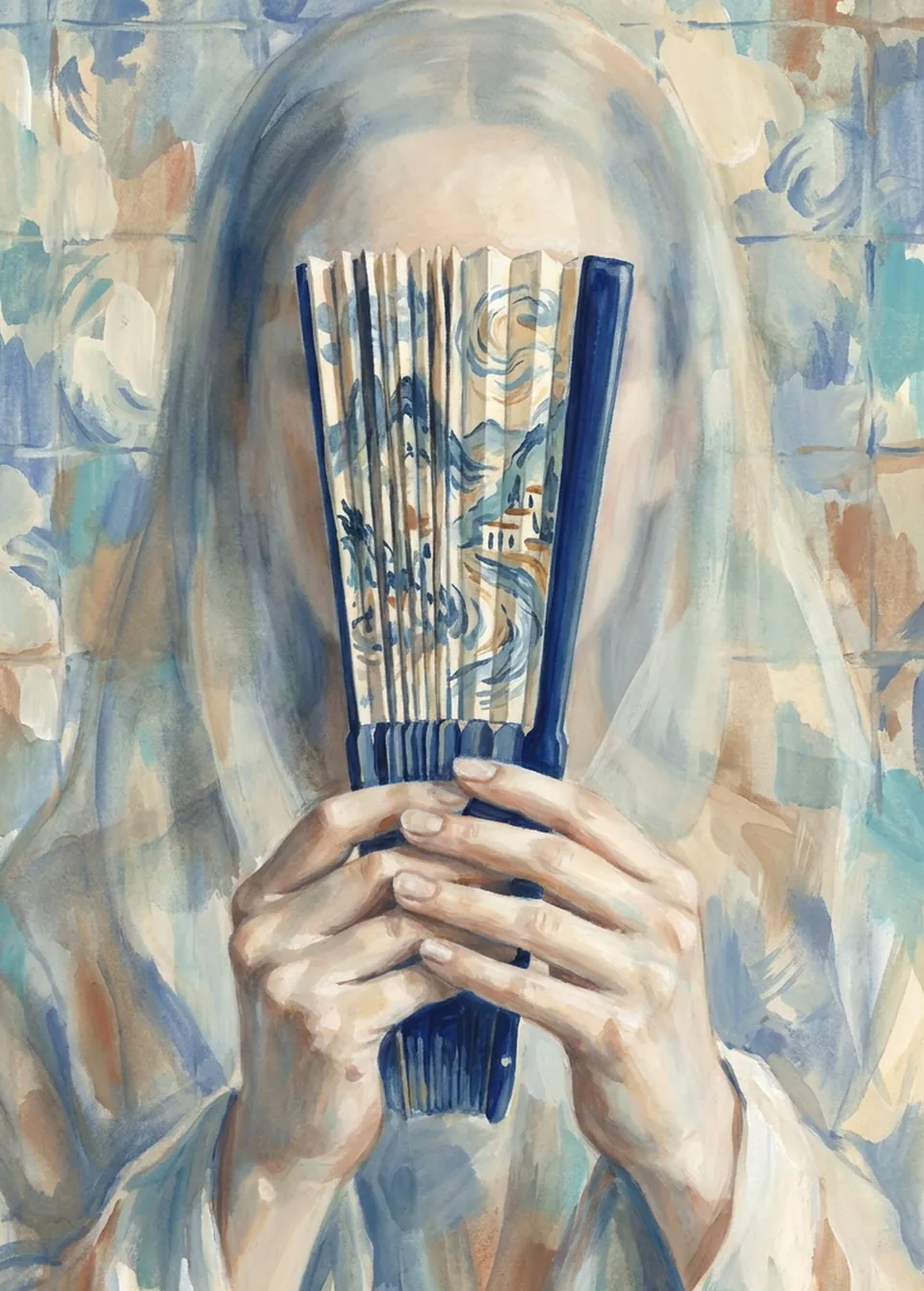
The Silence
What was known, and not said.
Why this image
A figure under a pale veil holds a folding fan closed in front of the face, against a wall of washed-out tiles; only the narrow pleats show that a landscape in blue is painted inside it. Back in Japan, the two Japanese freemasons of 1864 never spoke of what had happened on the Steenschuur, because freemasonry counted there as subversive 1. In 2017 a guide to the traces of slavery in Leiden asked whether the university's intellectuals had spoken out against slavery; the answer is mostly no 2. And the first generation of Turkish Leiden is being recorded now, before its stories are lost 3.
What it draws on · 3
het zwijgen
Back in Japan they never spoke of it. Freemasonry counted there as a subversive organisation, and an unwritten understanding held that no Japanese was to be admitted; only after the surrender of 1945 did General MacArthur lift that restriction, and only then did more Japanese freemasons follow. What happened on the Steenschuur in 1864 therefore became known in Japan itself much later.
Sources · 3
- Nederlandstalige Wikipedia — Loge La Vertu: 'zij hebben er in Japan nooit over gesproken'
- Skirret — 'Historical Background of Freemasonry in Japan'; 'Masonry in Japan 1864-1941'
- Cambridge — 'Freemasonry in Japan'
wie er sprak en wie zweeg
In 2017 the Leiden historians Gert Oostindie and Karwan Fatah-Black published 'Sporen van de slavernij in Leiden' — Traces of Slavery in Leiden — a guide to the places in the city connected with slavery and the slave trade. One of its four parts is about the university and the intellectuals: whether they spoke out against slavery. The answer is mostly no.
Sources · 2
- Gert Oostindie & Karwan Fatah-Black, 'Sporen van de slavernij in Leiden' (Leiden University Press, 2017)
- Leiden University Press — inhoudsbeschrijving: 'Zwart en wit', 'Universiteit en intellectuelen', 'Collecties en schilders'
zestig jaar
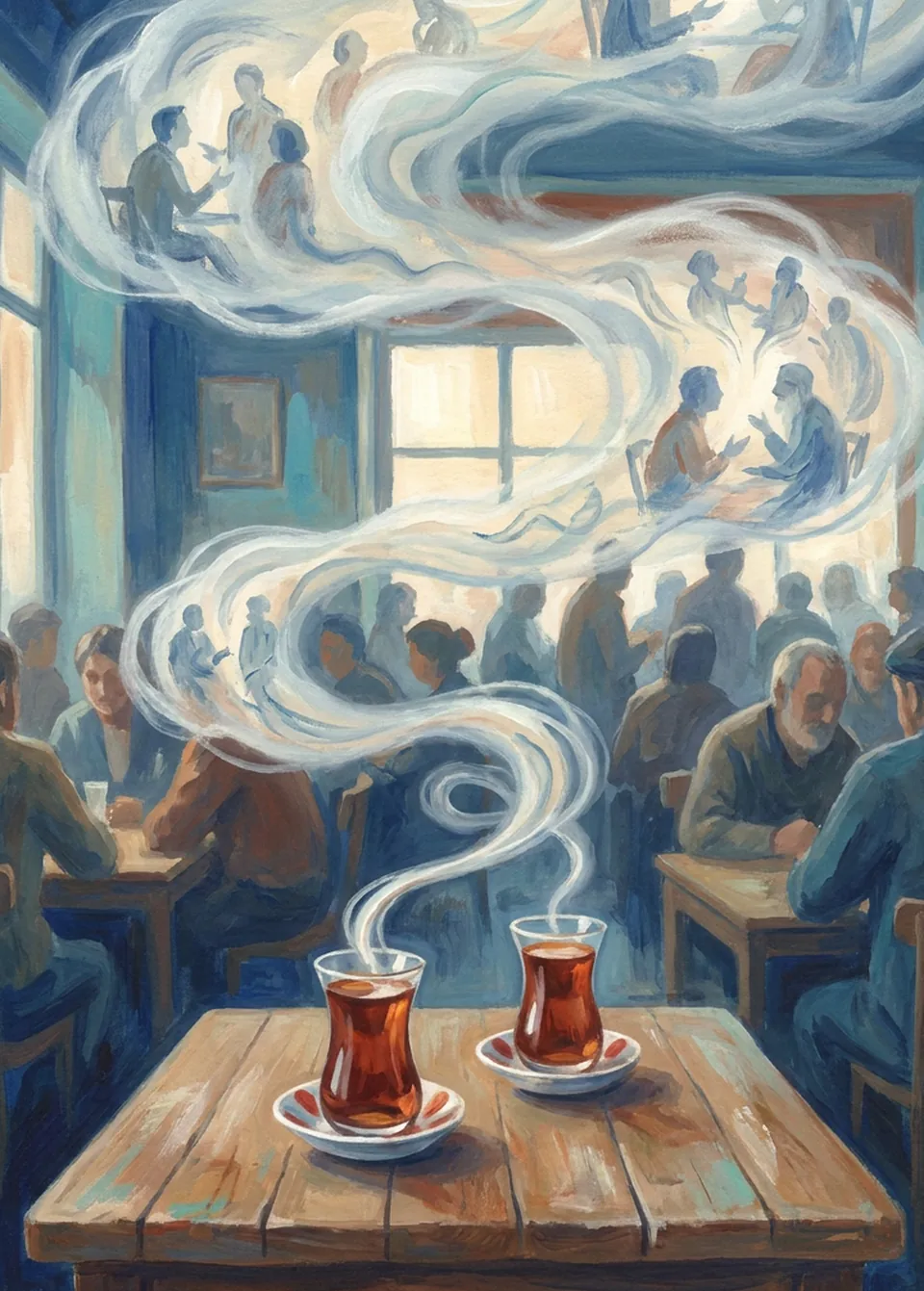
In 2024 Leiden marked sixty years of Turkish life in the city; the third generation lives here now. The stories of the first generation — the generation that found one another in this tea house — are being recorded before they are lost.
Sources · 2
- Sleutelstad — tentoonstelling '60 jaar Turkse migratie' in stadhuis Leiden (2024)
- Centraal+ — Leiden viert zestig jaar Turkse Leidenaren (2024)
Shares its places with · 10
 Carried HomeLoge La Vertu · Mansions on the Rapenburg
 The Only WindowLoge La Vertu
 Remain What You AreLoge La Vertu
 Under One RoofLoge La Vertu
 Forever RenewedFirst Turkish Tea House
 In the SteamFirst Turkish Tea House
 The DepartureFirst Turkish Tea House
 Named After a CoastMansions on the Rapenburg
 Cloth That BoughtMansions on the Rapenburg
 Only the YieldMansions on the Rapenburg
Painted with an image model from the facts on this page, and chosen by hand. City in Motion.