A Thread from Far
The wool on a Dutch loom began on a hillside very far away.
Why this image
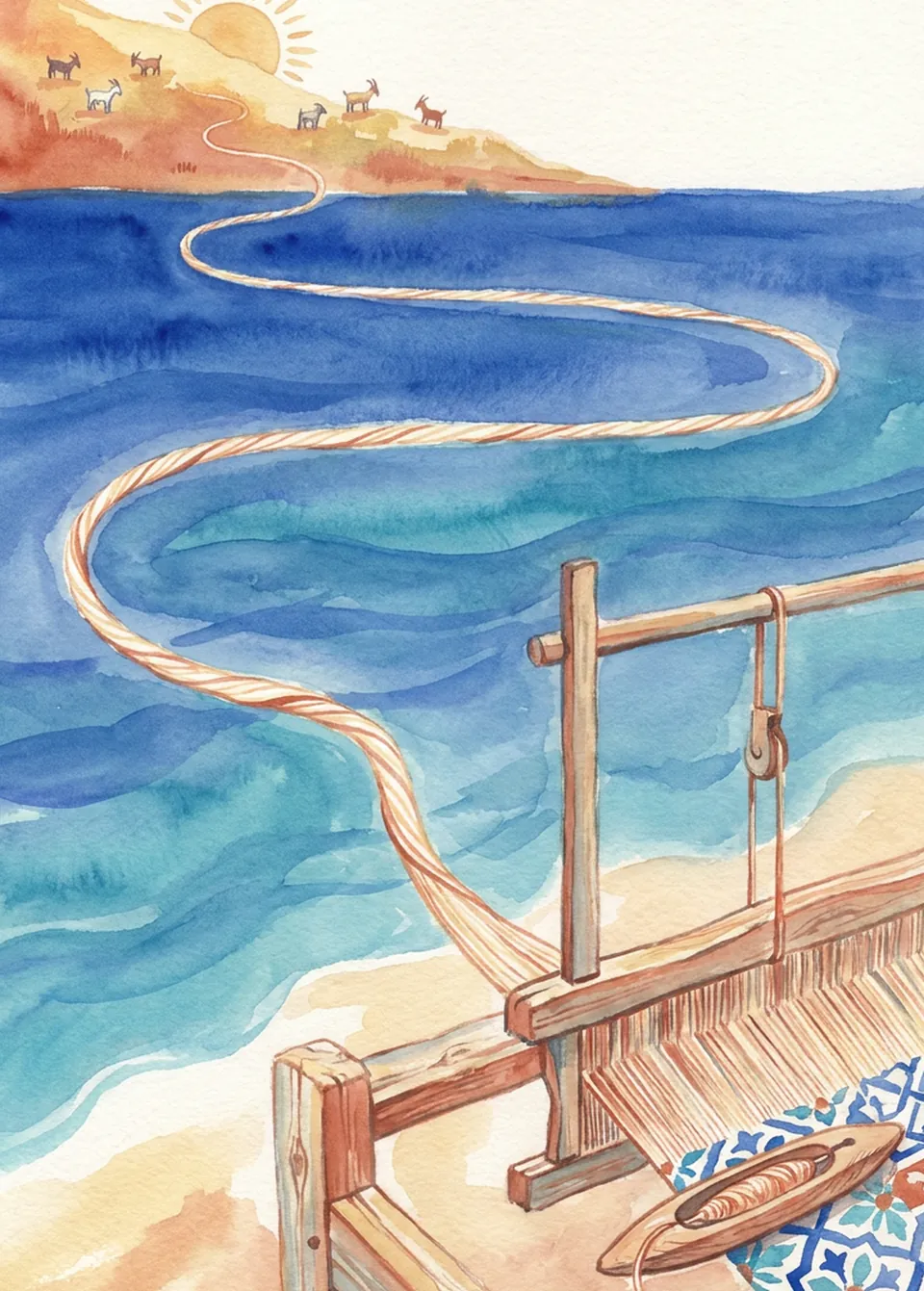
A twisted thread of cream and terracotta wool runs from a sunlit hillside where goats graze, across a wide cobalt sea, to a wooden loom on the near shore. From the Ottoman Empire Dutch traders bought angora wool, silk and cotton, and those raw materials ended up in Leiden's looms 1. A merchant put that trade above his door: after the Relief of 1574 Leiden had turned to lighter cloths that called for more than sheep's wool 2. Refugees from southern Flanders brought the 'new draperies', and Leiden grew into the largest producer of woollen cloth in Europe 3. Not painted, but the same thread: the Singelpark's Lakenpark and Katoenpark still carry the trade in their names 4.
What it draws on · 4
waar de grondstof vandaan kwam
The wool, cotton, silk and dyestuffs came from southern Europe, Asia, and North and South America. From the Ottoman Empire Dutch traders bought angora wool, silk and cotton, and those raw materials ended up in Leiden's looms. What was inspected here as Leiden cloth had, in part, come a very long way.
Sources · 2
- Museum De Lakenhal — lakenhal.nl: 'Leids Laken' (wol, katoen, zijde en kleurstoffen uit Zuid-Europa, Azië en de Amerika's)
- Directie van de Levantse Handel — Ottomaanse producten: angorawol, zijde, katoen
wat er verhandeld werd
The merchant had reason for that pediment. Dutch traders bought angora wool, silk, cotton, carpets, dried fruit and gall nuts in the Ottoman Empire, and after the Relief of 1574 Leiden had turned to lighter cloths such as say, which called for raw materials beyond sheep's wool. What stood above his door was his own business.
Sources · 3
- Leiden In Motion: De Diversity Walk — Stichting Güney / Turksarchief.nl
- Directie van de Levantse Handel — Ottomaanse producten: angorawol, zijde, katoen, tapijten, gedroogde vruchten, galnoten
- Lakennijverheid in de Lage Landen — Leiden na het Ontzet (1574): saai en lichtere stoffen
wat zij meebrachten
The arrival of Flemish textile workers after 1584 cannot be separated from the revival of Leiden's cloth industry; Walloons and Brabanters came from Antwerp and Leuven as well. Refugees from southern Flanders, especially from Hondschoote, brought the 'new draperies': lighter and cheaper fabrics of coarse, long-fibred wool. Leiden grew into the largest producer of woollen cloth in Europe.
Sources · 3
- Nederlandstalige Wikipedia — Geschiedenis van Leiden: Vlaamse textielarbeiders na 1584, Walen en Brabanders uit Antwerpen en Leuven
- Vijfeeuwenmigratie — 1580-1700: 'nieuwe draperieën' uit Hondschoote
- Museum De Lakenhal — 'Leids Laken'
de namen van de parken
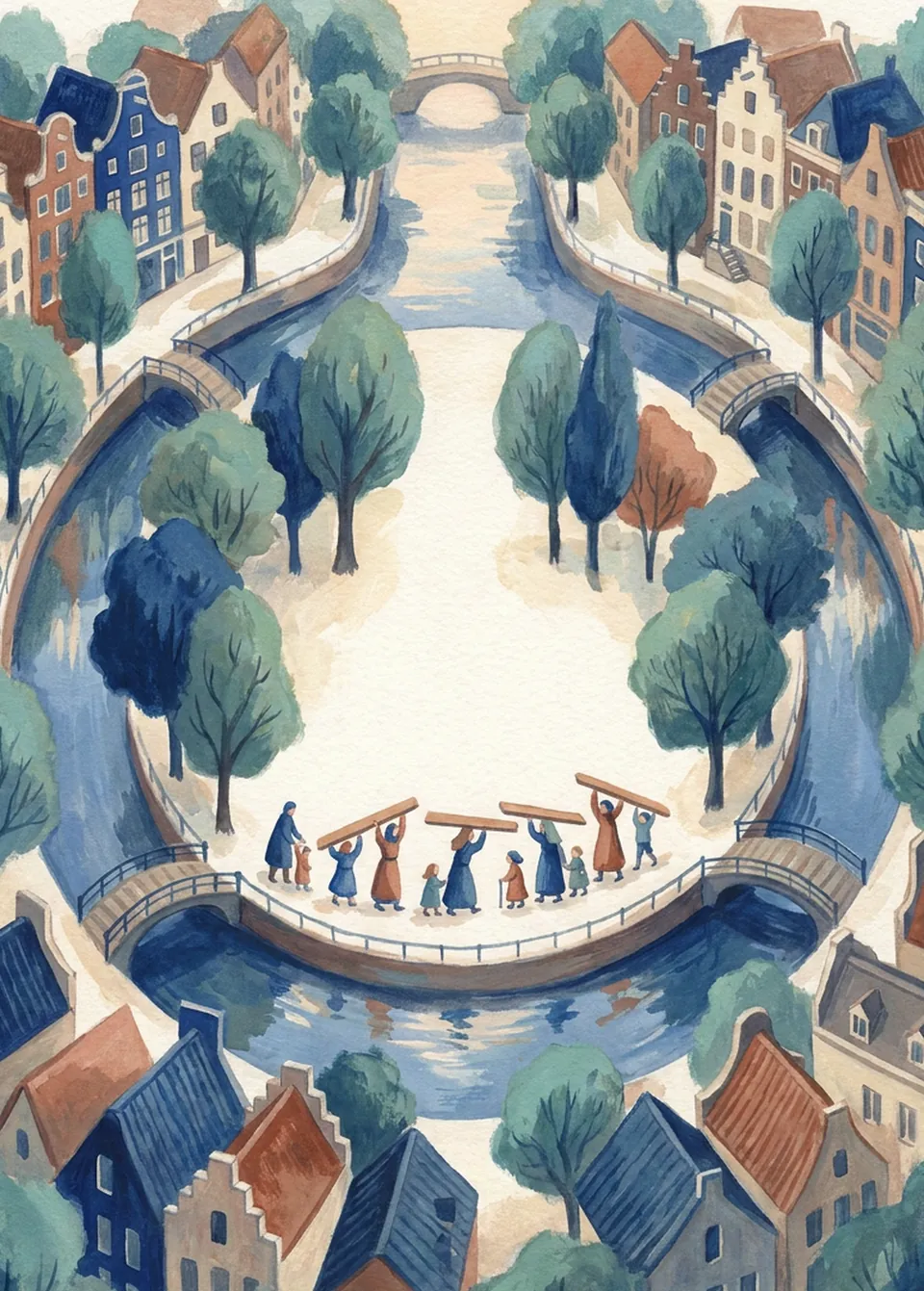
The ring strings existing parks together: the Plantsoen, the Katoenpark, the Ankerpark, the Blekerspark, the Huigpark, the Energiepark, the Lakenpark, the Rembrandtpark and the Sterrenpark. Those names count off the city's trades — laken and katoen from the cloth trade, the anchor from the forge, the bleacher from the whitening of fabric. Walk the loop and you read where Leiden earned its living.
Sources · 2
- Nederlandstalige Wikipedia — Singelpark: Rembrandtpark, Sterrenpark, Blekerspark, Huigpark, Energiepark, Ankerpark, Lakenpark, Katoenpark
- Gemeente Leiden — projecten: Singelpark
Shares its places with · 11
 The Name RemainsSingelpark · In den Vergulden Turk (At the Gilded Turk)
 The Refilled CityWalloon Church · Municipal Museum De Lakenhal
 The Tree Comes HomeSingelpark
 The Ring Still ClosingSingelpark
 The Lion Steps DownSingelpark
 A Voice in the AirWalloon Church
 Remain What You AreWalloon Church
 Higher GroundWalloon Church
 Another FlagIn den Vergulden Turk (At the Gilded Turk)
 The MoonIn den Vergulden Turk (At the Gilded Turk)
 The ScaleMunicipal Museum De Lakenhal
Painted with an image model from the facts on this page, and chosen by hand. City in Motion.